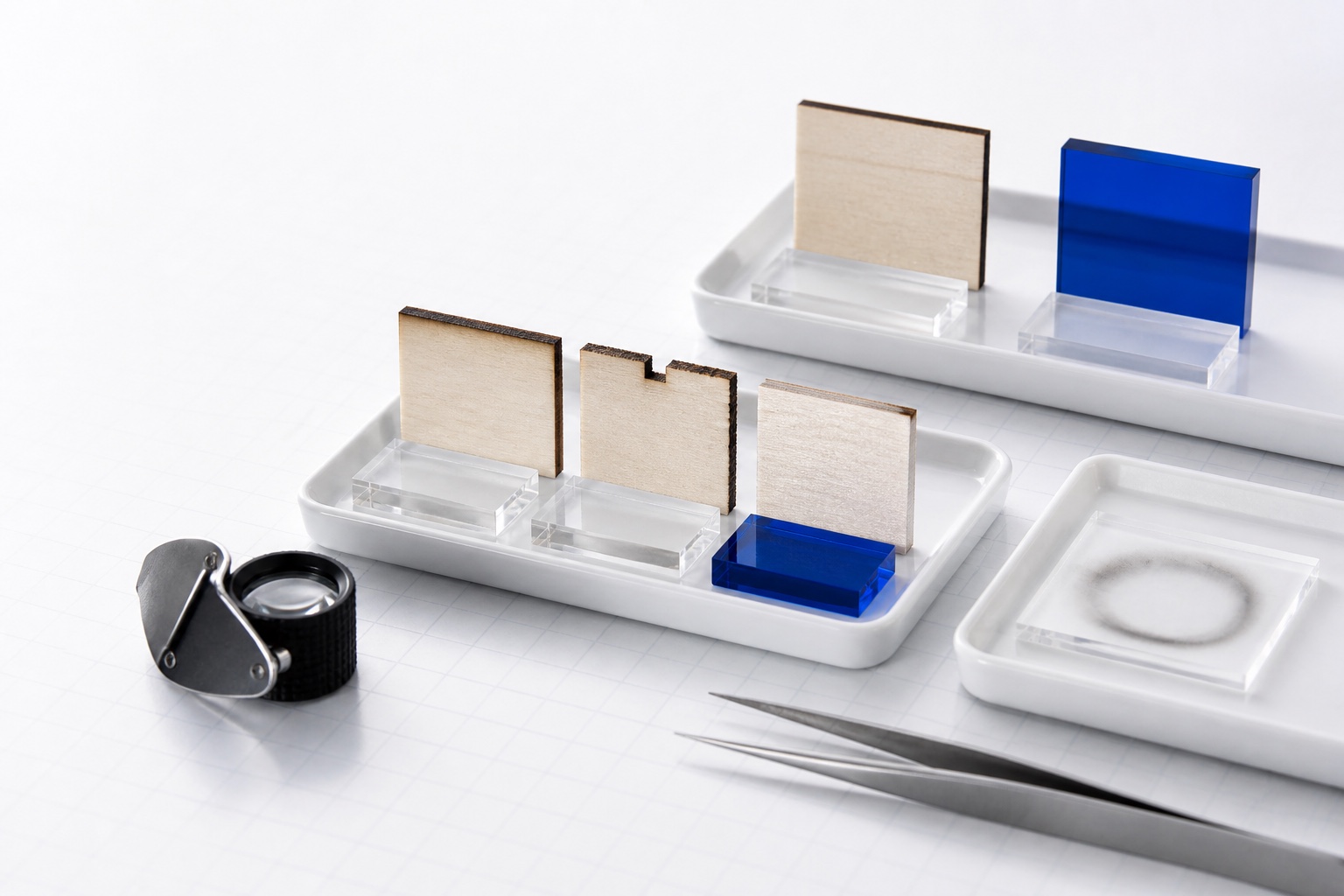
Stop boundary: Do not raise power to recover detail; that usually destroys fine lines.
Diagnostic order
Classify before you change anything.
Incomplete cuts, soot, haze, lost detail and flare-ups do not share one cause. Diagnosis begins by describing where the defect appears and what stayed constant.
Use it when: an exact-context test fails, degrades, or changes across the work area.
01
Classify the visible symptom before changing a setting.
02
Check material, focus, optics, airflow and mechanics in that order.
03
Change one cause at a time and preserve the failed sample.
Symptom branches
Choose the branch that matches.
Each branch protects material identity, exact machine context and a mandatory stop boundary.
Sustained flame, hazardous fumes, machine faults or unknown material/coating are stop events—not tuning branches. Stop, cool, secure the area and follow the exact machine manual and local emergency procedures.